- Home
- Things and places named Fairy
- What Are Fairy Circles
What are Fairy Circles?
Unveiling Nature's Mysterious Rings!
Have you ever stumbled upon a perfect ring of mushrooms or a circular patch of bare earth in a meadow and wondered what created such a peculiar formation? You're looking at what's commonly known as a fairy circle, and these mysterious natural phenomena have captivated human imagination for centuries.
These enchanting rings appear in various forms across the globe, from lush mushroom circles in European forests to barren patches in African grasslands. Whether you're a believer in the mystical or simply curious about nature's oddities, fairy circles offer a fascinating glimpse into both folklore and science.
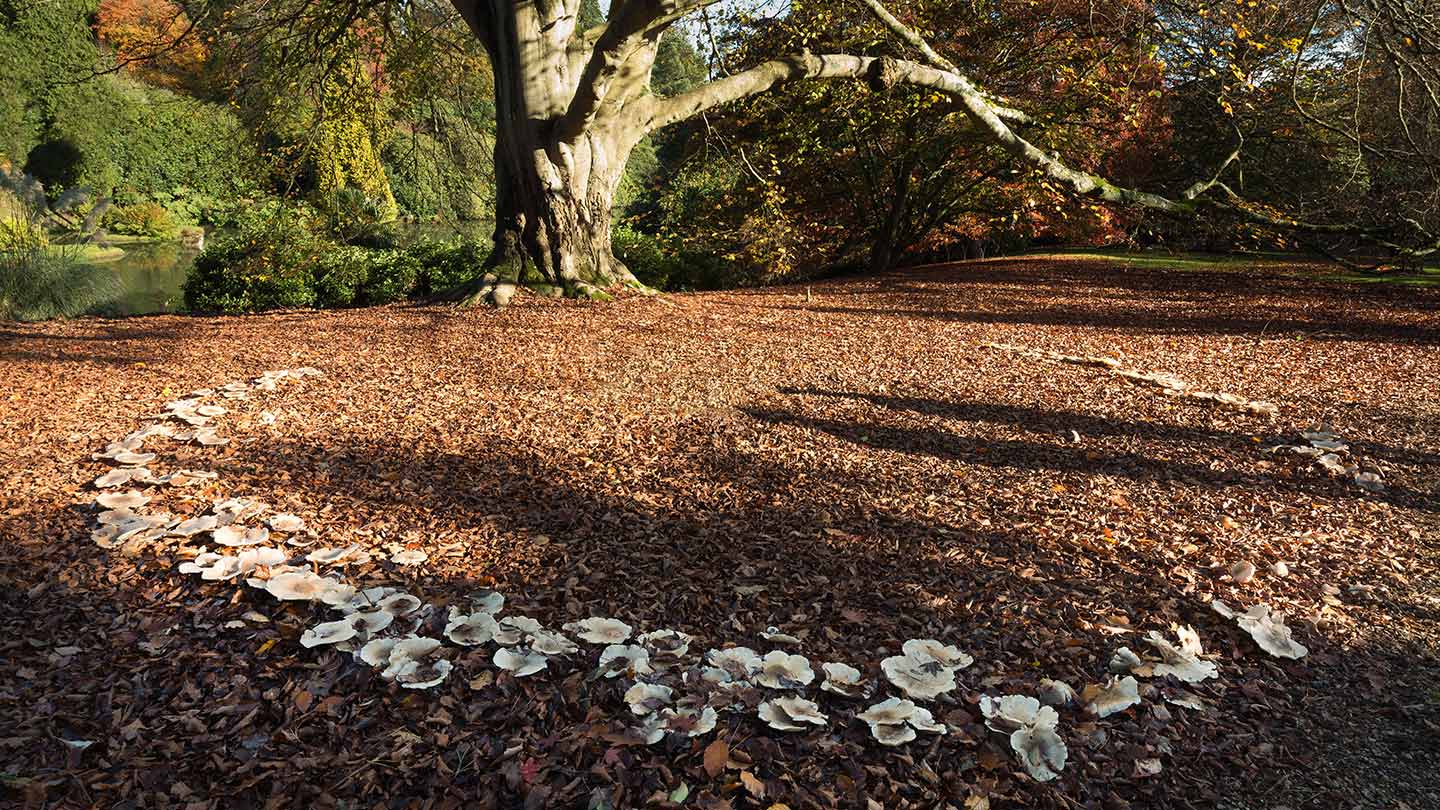 A mushroom fairy ring
Fairy Garden Accessories for Outdoor Miniature Village

Transform your outdoor space into a whimsical retreat with fairy garden decor; perfect for creating magical scenes with fairy garden accessories that spark imagination.
Click here to check availability and pricing on Amazon!
What are Fairy Circles?
So, what are fairy circles exactly? In the simplest terms, fairy circles are circular patterns that appear in nature, most commonly as rings of mushrooms growing in grassy areas or as bare circular patches in vegetation.
The term "fairy ring" typically refers to the mushroom variety, while "fairy circles" can describe both mushroom rings and the mysterious bare-earth circles found in certain grasslands. These formations can range from just a few feet to over 100 feet in diameter, and some have been documented to persist for decades or even centuries in the same location.
The Mushroom Ring
The most recognizable type of fairy circle is the mushroom ring, which you've probably seen in parks, lawns, or wooded areas. These rings form when mushrooms sprout in a circular pattern, often creating a nearly perfect circle that expands outward year after year.
The grass inside these rings might appear darker and more lush than the surrounding area, or sometimes it looks withered and brown. This striking visual contrast is what first catches your eye and makes you stop to wonder about their origin.
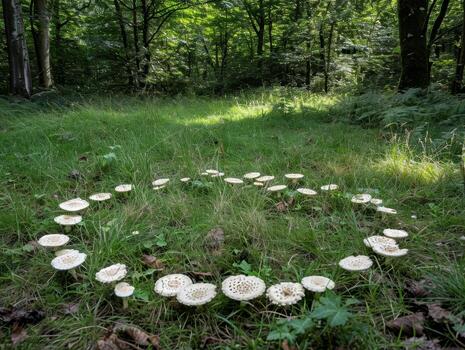 A mushroom fairy ring
Fairy Circle Locations
Now, let's talk about where you might find these magical-looking formations. Fairy circles appear on nearly every continent, though they're most commonly spotted in temperate regions with adequate moisture. In Europe and North America, you'll find mushroom fairy rings in forests, meadows, and even suburban lawns after rainy periods.
The famous Namib Desert in Africa hosts a different type of fairy circle—mysterious bare patches that dot the landscape in remarkably regular patterns. Similar formations have been discovered in Australia's outback, making fairy circles a truly global phenomenon.
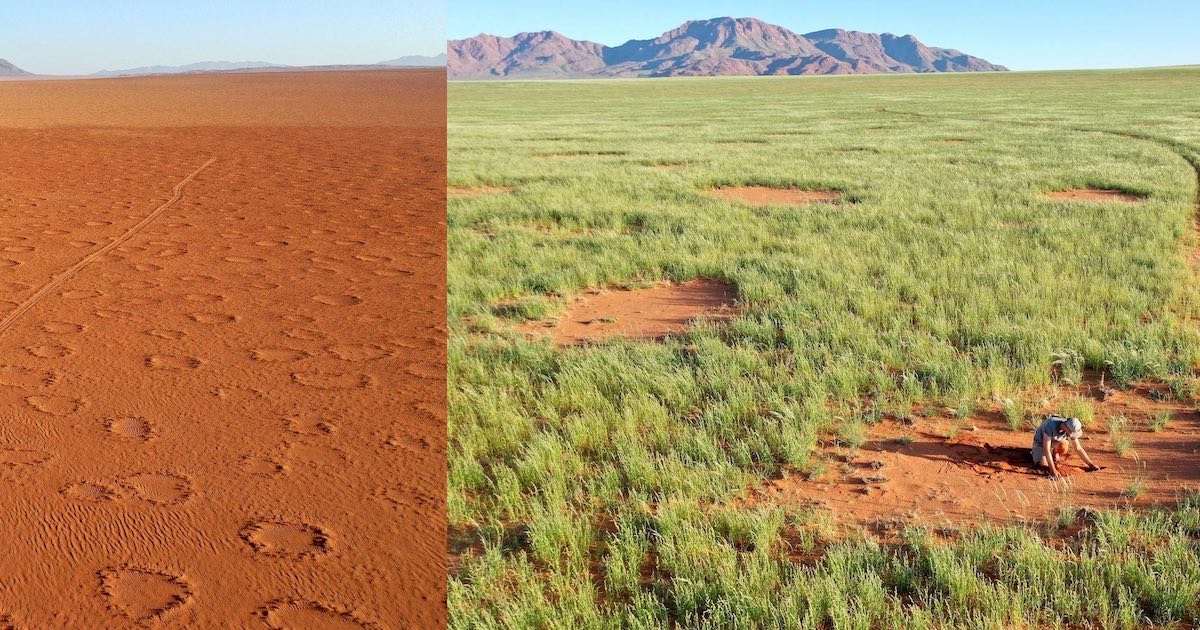 Fairy Circles in Namibia
Fairy Circles and Folklore
Before we dive into the science, let's explore the enchanting folklore that gave fairy circles their name. Throughout history, people have woven magical tales to explain these mysterious rings, and most of these stories center around fairies, elves, and other supernatural beings.
In European folklore, these circles were believed to be portals to the fairy realm or dancing grounds where fairies gathered under moonlight. The warnings passed down through generations were clear: don't step inside a fairy circle, or you might be whisked away to the fairy world!
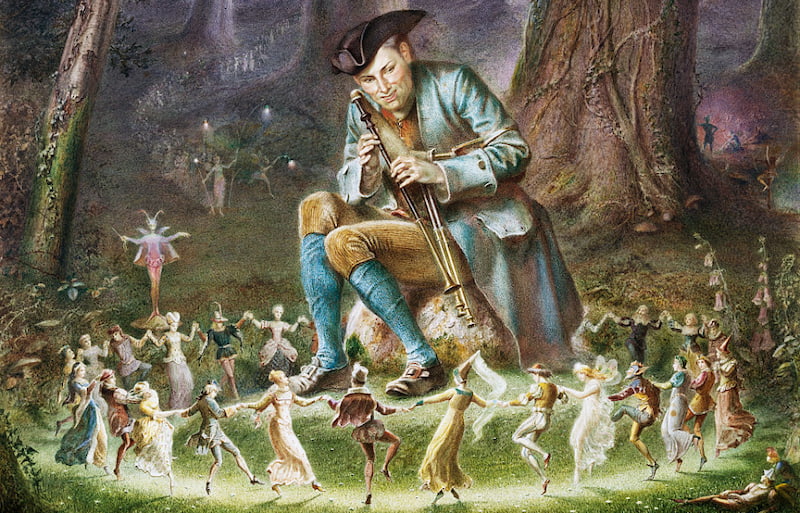 Fairy circles and folklore
Medieval Europeans held a particularly strong belief that fairy circles marked the spots where fairies danced in celebration. According to legend, if you were unlucky enough to witness their midnight revelries, you'd be compelled to join their dance until you collapsed from exhaustion.
Some tales suggested that a single night of dancing with the fairies could mean years had passed in the human world when you finally returned. Parents would warn their children to give these circles a wide berth, especially after dark when the fairy folk were said to be most active.
Cultural Legends
Different cultures developed their own unique interpretations of what is a fairy circle. In Germanic folklore, the rings were called "hexenringe" or witch's rings, believed to mark places where witches gathered for their sabbaths.
Dutch legends spoke of fairy circles as the result of dragons' fiery breath scorching the earth in perfect circles. In Scandinavian countries, people believed that fairy circles appeared where elves had danced, and the rings served as doorways between the human world and the realm of the elves.
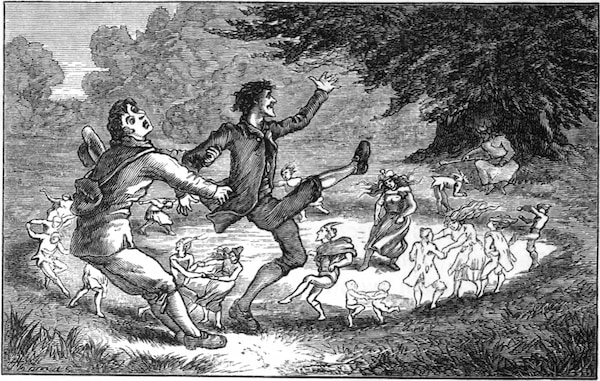 Being saved from the grip of a fairy ring! Photo courtesy T. H. Thomas
The Scottish and Irish traditions are particularly rich with fairy circle lore. In these Celtic lands, fairies weren't always the tiny, delicate creatures of Victorian imagination—they were powerful, sometimes dangerous beings who demanded respect. A fairy circle was considered sacred ground, a threshold between worlds that shouldn't be crossed lightly.
Some believed that if you ran around a fairy circle nine times under a full moon, you could hear the fairies dancing beneath the earth. Others warned that disturbing a fairy circle would bring terrible luck upon your household.
One particularly charming belief held that the lush, dark grass often found inside fairy rings was the result of fairy magic enriching the soil. Farmers sometimes viewed these rings as blessings, signs that the fairy folk looked favorably upon their land.
However, if the grass inside the ring appeared dead or withered, it was seen as a bad omen - evidence that malevolent spirits had claimed that spot. This dual nature of fairy circles, as both blessing and curse, reflects the complex relationship humans have always had with the unknown.
The Science of Fairy Circles
Mushroom Rings
Now that we've explored the magical side, let's get into the science of what causes fairy circles. The mushroom variety of fairy rings has a straightforward biological explanation that's actually quite fascinating. These rings form from the underground network of fungal threads called mycelium.
When a mushroom releases its spores and they land on suitable ground, the mycelium begins growing outward in all directions from that central point, creating an expanding circle beneath the soil's surface.
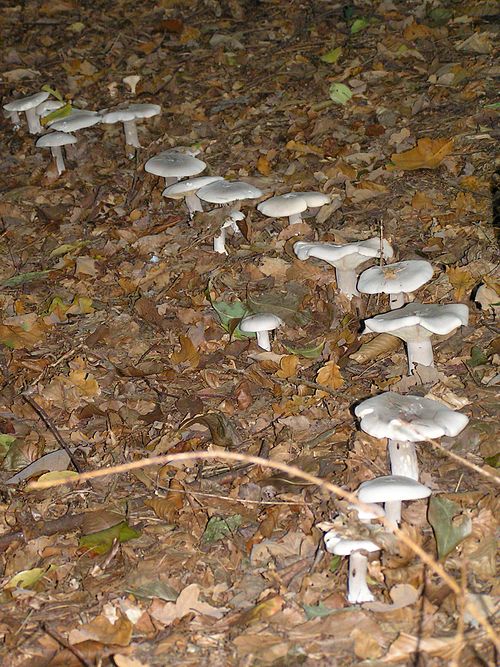 mushrooms in a fairy ring
As the mycelium spreads outward, it depletes the nutrients in the soil at the center while enriching the outer edges where it's actively growing. This is why you often see that ring of darker, lusher grass just outside the mushroom circle—the fungi are breaking down organic matter and releasing nitrogen and other nutrients that plants love.
The mushrooms themselves only appear above ground when conditions are right, typically after rainfall, but the mycelium is working underground year-round, slowly expanding the circle outward.
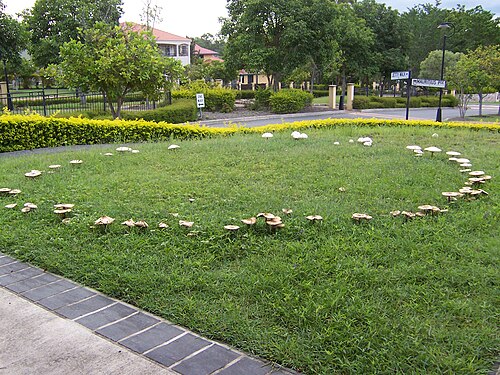 A fairy ring in Brisbane, Australia
The mushrooms you see sprouting in the ring are actually the "fruiting bodies" of the fungus, similar to how apples are the fruit of an apple tree. The real organism is that vast network of mycelium underground, which can be incredibly old.
Some fairy rings have been estimated to be over 700 years old, with the mycelium continuously expanding outward at a rate of a few inches to a couple feet per year. That means the fairy ring you're looking at today might have started growing during the Middle Ages!
What are Fairy Circles?
African Fairy Circles
The African fairy circles present a more complex mystery that scientists have debated for decades. These bare circular patches in grasslands, particularly famous in Namibia, don't involve mushrooms at all. For years, researchers couldn't agree on what causes fairy circles in these arid environments.
Some scientists proposed that termites were responsible, creating the circles by clearing vegetation around their underground colonies. The bare patches would then collect water during rare rainfalls, benefiting the surrounding grass and creating those distinctive rings.
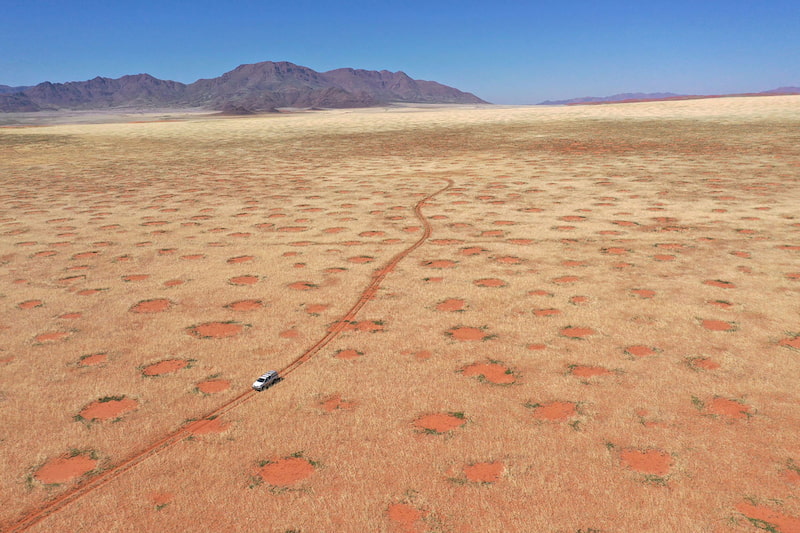 Namib desert fairy circles
Other researchers argued that fairy circles in Africa result from plants competing for scarce water resources in a process called self-organization. According to this theory, grasses arrange themselves in patterns that maximize water collection and usage. The bare spots act as water catchment areas that feed the surrounding vegetation, creating a sustainable ecosystem pattern.
Recent studies suggest that both explanations might be correct—that termites and plant competition work together to create and maintain these mysterious circles.
What makes the scientific study of fairy circles so interesting is that it demonstrates how nature can create remarkably regular patterns without any conscious design. Whether formed by fungi, termites, or plant competition, fairy circles show us that mathematical patterns and geometric shapes aren't just human inventions—they're fundamental to how nature organizes itself.
It's no wonder that our ancestors, lacking microscopes and ecological knowledge, attributed these perfect circles to supernatural forces.
Finding a Fairy Circle
If you're hoping to spot fairy circles yourself, timing and location are everything. For mushroom fairy rings, your best bet is to explore grassy areas, parks, and forests during late summer and fall, especially after periods of rain.
Early morning is ideal because the mushrooms are fresh and haven't been disturbed by foot traffic or animals. Look for those telltale circular patterns in the grass—you might spot the dark green ring even before you see any mushrooms.
The mushrooms that form fairy rings vary depending on your location, but some common species include the fairy ring mushroom (Marasmius oreades), which is actually edible and prized by foragers, though you should never eat wild mushrooms unless you're absolutely certain of their identification.
Other species that form rings include various puffballs, parasol mushrooms, and certain types of agarics. Each species has its own preferred habitat and growing season, so fairy circles can appear throughout much of the year in temperate climates.
Namib Desert Fairy Circles
For those adventurous people wanting to see the famous Namib Desert fairy circles, you'll need to plan a trip to Namibia in southern Africa. These circles are found in the arid grasslands stretching along the Namib Desert, particularly in areas like the NamibRand Nature Reserve.
Unlike mushroom rings that come and go with the seasons, these African fairy circles are permanent features of the landscape, visible year-round. The best time to visit is during Namibia's summer months (November to March) when occasional rains bring the surrounding grasses to life, making the contrast with the bare circles even more dramatic.
The Appeal of Fairy Circles
The enduring appeal of fairy circles lies in their ability to bridge the gap between science and wonder. Even though we now understand the biological and ecological processes that create these formations, there's something undeniably magical about encountering a perfect ring of mushrooms in a misty forest or seeing thousands of circular patches dotting an African landscape.
They remind us that nature still holds mysteries and that the line between the explainable and the enchanting isn't always as clear as we might think.
In modern times, fairy circles have found their way into popular culture, appearing in fantasy literature, films, and art. They've become symbols of the threshold between the mundane and the magical, representing those thin places where, as Celtic tradition suggests, the veil between worlds grows super thin.
Literature and Art
Fairy rings have been featured in the works of European authors, playwrights, and artists since the 13th century. English playwright William Shakespeare mentions them in 'A Midsummer Night's Dream', and they are also mentioned in 'The Tempest' play.
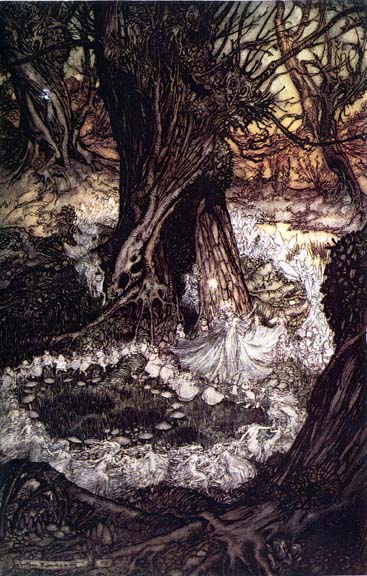 illustration in A Midsummer Night's Dream - photo courtesy Arthur Rackham
Fairy circles have appeared in European artwork since at least the 18th century. William Blake painted Oberon, Titania and Puck with dancing fairies, depicting a scene from Shakespeare's A Midsummer Night's Dream as mentioned above, around 1785. Daniel Maclise painted Faun and the Fairies in 1834.
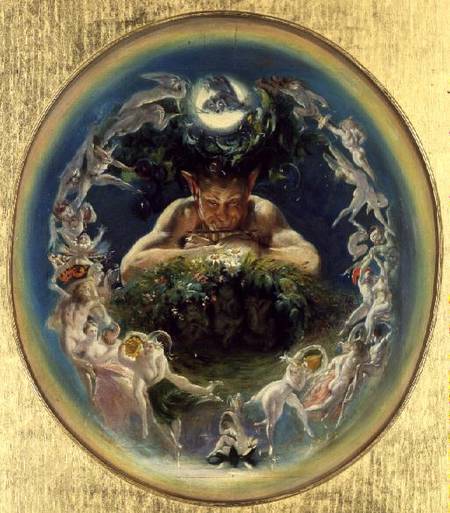 Faun and the Fairies by Daniel Maclise
Although the fairy realm may be seen as benevolent, on the other hand, according to many folk tales, an invasion of the Fairy ring is perilous for men!
Garden designers sometimes deliberately cultivate fairy rings, and they've become popular features in fairy gardens and mystical-themed landscapes. This contemporary fascination shows that even in our scientific age, we're still drawn to the mystery and beauty of these natural formations.
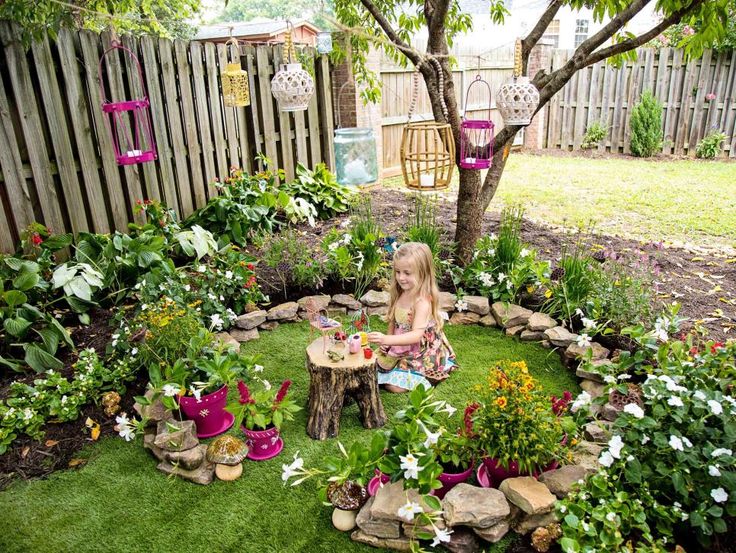 A fairy circle in a garden
Whether you approach fairy circles as a scientist, a folklore enthusiast, or simply someone who appreciates nature's curiosities, they offer something valuable. They teach us about fungal ecology, pattern formation in nature, and how ecosystems organize themselves.
They connect us to centuries of human storytelling and our ancestors' attempts to make sense of the world around them. And perhaps most importantly, they remind us to pay attention to the small wonders beneath our feet - to look down occasionally and notice the extraordinary patterns that nature creates.
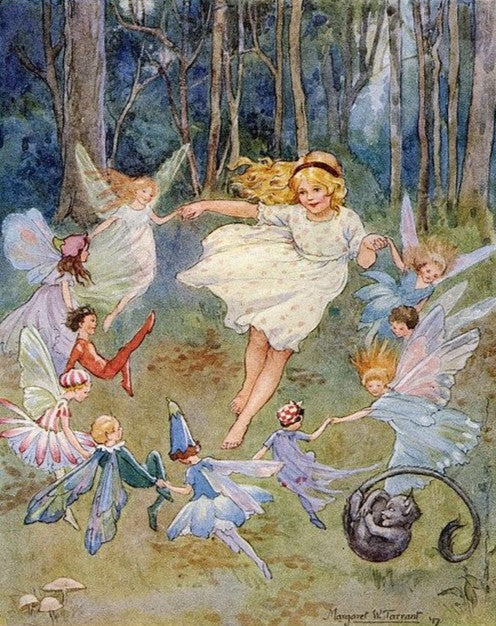 Magical fairy circle world!
Conclusion
So the next time you're walking through a park or meadow and you spot a ring of mushrooms or an unusual circular pattern in the vegetation, take a moment to appreciate what you're seeing. You're looking at a phenomenon that has puzzled and delighted humans for millennia, a natural formation that inspired countless tales of fairy dances and magical portals.
Whether you choose to see it through the lens of mycology or mythology, a fairy circle is a reminder that our world is full of wonders waiting to be discovered.
And who knows? Maybe, just maybe, there's a bit of magic there after all - the kind of magic that comes from nature's incredible ability to create beauty and pattern in the most unexpected places.
Brightown 12 Pack LED Fairy Lights

Perfect for both everyday decorations as well as holiday decor. Easy to bend it to any shape or wrap it on anything you want like photos, shelves, walls, mirrors, crafts, furniture, wreaths, trees, branches, plants, flowers, or wedding déco! Indoor or outdoor use.
Click here for availability and best price on Amazon!
Most Popular!

Sequel to When the Moon Hatched - a vibrant world with mysterious creatures, a unique magic system, and a love that blazes through the ages!
CLICK HERE for availability and best price!
Recent Articles


-
Fairy Coloring Pages
Jun 14, 26 06:13 AM
 Fairy coloring pages and drawings to be printed
 -
Accessories For A Fairy Garden - Bring Magic To Your Backyard!
Jun 14, 26 06:05 AM
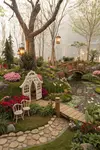 Find the best accessories for a fairy garden - be inspired by our magical selection for your fairy world - be the envy of your neighbors!
 -
Fairy Tail Video Games
Jun 12, 26 03:43 AM
 Fairy Tail Video Games! Find out what makes Fairy Tail such a great fit for video games, and all about the franchise that has built a gaming legacy!