- Home
- Dragons in folklore, history and literature
- Japanese Dragons
Japanese Dragons
Japanese dragons, or "ryū" (龍), are legendary creatures in Japanese mythology and folklore. They have deep cultural and historical roots in Japan and are often depicted in various forms of art and literature. They differ from their Chinese and Western counterparts in several ways.
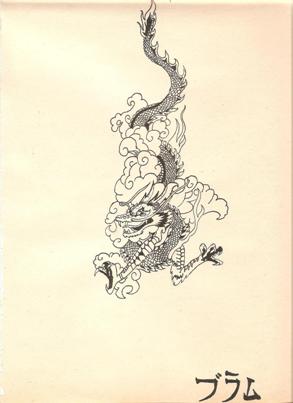
Japanese dragons are diverse legendary creatures in Japanese mythology and folklore. Native dragon myths and legends are close to legends from Korea and China. Some parts of Japanese Dragons myths are from India.
The style of Japanese dragons is very similar to Chinese Dragons. They are usually shown as large wingless snake-like creatures with large feet that have long claws. Most of the legends and stories have them associated with the sea or lakes or rivers and even rainfall.
Fairy Garden Accessories for Outdoor Miniature Village

Transform your outdoor space into a whimsical retreat with fairy garden decor; perfect for creating magical scenes with fairy garden accessories that spark imagination.
Click here to check availability and pricing on Amazon!
Japanese Dragons Are Good
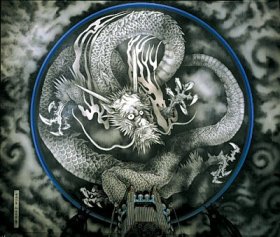
These dragons like all Asian dragons are not evil, unlike the mythical dragons found in European dragon tales. The medieval dragons from European folklore are destructive mythical creatures that kill, steal gold and gems and horde these into great treasures.
On the Pacific coast of Japan, a great temple was built at Kamakura to celebrate the occasion of Benten saving the area from his wrath.
For the most part these creatures are thought to be kind and the bringer of good fortune. An exception to this, comes from a Japanese legend that tells of a dragon king that has scales and a flicking tongue. He was very destructive and brought chaos wherever he went.
He would invade villages and devour innocent children. He was held in check by the goddess of love, Benten. She charmed him with words of love. She said that she would marry him and be with him always if he would promise to end his wrath against mankind.
Characteristics of Japanese Dragons
Physical descriptions of these dragons are similar to the Chinese and Korean dragons except for some slight differences. The Japanese dragons have three claws instead of four and they do not always have wings.
Physical appearance: Japanese dragons are usually depicted as serpentine creatures with elongated, slender bodies and three claws on each limb. They often have a long, flowing mane and a row of dorsal fins or spikes along their backs. They may also have whiskers and a pearl-like gem under their chins, symbolizing wisdom and the power to control natural elements.
- Water deities: Japanese dragons are often associated with water and are considered to be water deities. They are believed to have the power to control rain, floods, and other water-related phenomena. As such, they are often depicted near or within bodies of water such as rivers, lakes, and oceans.
- Benevolent nature: Unlike the destructive and malevolent dragons often found in Western mythology, Japanese dragons are generally seen as benevolent creatures. They are known to protect humans and grant them wishes, and they are revered as symbols of wisdom, power, and good fortune.
- Shapeshifting abilities: Some Japanese dragons are said to possess the ability to shapeshift, often taking on human forms. They are also known to transform into other creatures or objects, as well as altering their size.
- Connection to Buddhism: The symbolism and depiction of Japanese dragons have been influenced by Buddhism, which was introduced to Japan from China and Korea. In Buddhist mythology, dragons are considered protectors of Buddhist teachings, and they often appear in temple art and architecture.
Notable Japanese Dragons
 Yamata no Orochi
- Yamata no Orochi: A fearsome eight-headed and eight-tailed dragon from Japanese mythology, defeated by the Shinto storm god Susanoo.
- Ryūjin: The dragon king of the sea, also known as Ōwatatsumi, is a central figure in Japanese mythology. He is said to live in an underwater palace and has control over the tides and sea creatures.
- Toyotama-hime: The daughter of Ryūjin, she married a human hero named Hoori and gave birth to the first emperor of Japan, Emperor Jimmu.
Dragons in Japanese Culture
Dragons play a significant role in Japanese culture, appearing in various forms of art, literature, and religious symbolism. They are often depicted in traditional Japanese ink paintings, woodblock prints, and sculptures. In addition, they are a popular subject in Japanese tattoo art, representing strength, wisdom, and protection.
Dragons are also featured in various festivals and events in Japan, such as the Gion Matsuri in Kyoto, where large dragon floats parade through the streets to bring good fortune and ward off evil spirits.
The dragon images in Japan are considered to be bringers of wealth and good fortune. According to legends they are believed to be capable of taking the shape of humans and is may even be capable of mating with humans. The age-old enemy of the dragon is the phoenix and sometimes a bird-man creature called Karura.
Shinto, a traditional Japanese religion, , tells of a kingdom of serpent people under the sea. This kingdom is ruled by the Dragon King, Ryu-wo. He lives in a spectacular palace of crystal and coral. The legend states that he has a human body, and a serpent entwined in his crown. Known for his nobility and wisdom, Ryu-wo was a guardian of the Shinto faith. People who have fallen into the sea are said to have lived on in the kingdom of Ryu-wo.
Read about Chinese Dragons here.
You may be interested in Chinese Dragon Art
Brightown 12 Pack LED Fairy Lights

Perfect for both everyday decorations as well as holiday decor. Easy to bend it to any shape or wrap it on anything you want like photos, shelves, walls, mirrors, crafts, furniture, wreaths, trees, branches, plants, flowers, or wedding déco! Indoor or outdoor use.
Click here for availability and best price on Amazon!
Most Popular!

Sequel to When the Moon Hatched - a vibrant world with mysterious creatures, a unique magic system, and a love that blazes through the ages!
CLICK HERE for availability and best price!
Recent Articles


-
Fairy Coloring Pages
Jun 14, 26 06:13 AM
 Fairy coloring pages and drawings to be printed
 -
Accessories For A Fairy Garden - Bring Magic To Your Backyard!
Jun 14, 26 06:05 AM
 Find the best accessories for a fairy garden - be inspired by our magical selection for your fairy world - be the envy of your neighbors!
 -
Fairy Tail Video Games
Jun 12, 26 03:43 AM
 Fairy Tail Video Games! Find out what makes Fairy Tail such a great fit for video games, and all about the franchise that has built a gaming legacy!