- Home
- Fairy Tales
- About Aesops Fables
About Aesop's Fables
About Aesop's Fables. Otherwise called the Aesopica, is a collection of fables credited to Aesop, a slave and storyteller believed to have lived in ancient Greece between 620 and 564 BCE.
The fables originally belonged to the oral tradition and were not collected for some three centuries after Aesop's death.
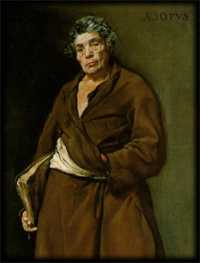 This is a rendition of Aesop by Diego VELAZQUEZ: Aesop (c. 1639-40).
Aesop Fables, were known for their teachings, because they almost always had a moral statement at the end of the story. If he wrote stories without a moral, what was he trying to communicate to the children.
Fairy Garden Accessories for Outdoor Miniature Village

Transform your outdoor space into a whimsical retreat with fairy garden decor; perfect for creating magical scenes with fairy garden accessories that spark imagination.
Click here to check availability and pricing on Amazon!
Aesop was a Greek fabulist and storyteller who is believed to have lived around the 6th century BCE. Although not much is known about his life, he is famous for his collection of fables, which are short stories that typically feature animals as the main characters and convey a moral lesson. These fables, known as Aesop's Fables, have been retold and adapted throughout history and remain popular today for their timeless wisdom and engaging storytelling.
About Aesops Fables
Aesop, a legendary figure from ancient Greece, is widely recognized for his collection of fables. Though much of his life remains shrouded in mystery, he is believed to have lived during the 6th century BCE. Fables attributed to Aesop continue to captivate audiences today, thanks to their engaging storytelling and timeless moral lessons.
Aesop's Fables are characterized by their brevity, wit, and wisdom. Typically, these short stories feature animals as the main characters, with each fable concluding with a moral lesson. Aesop's ability to use animals to represent human characteristics allowed for universal understanding of the messages he sought to convey. His fables often touch upon themes such as humility, cunning, honesty, and perseverance.
Some of Aesop's most well-known fables include "The Tortoise and the Hare," which teaches the lesson of perseverance and the dangers of arrogance; "The Boy Who Cried Wolf," which warns against lying; and "The Fox and the Grapes," which illustrates the concept of sour grapes or rationalizing failure.
About Aesops Fables
Many of Aesop's Fables have been passed down through generations, and some of his most famous stories include:
- The Tortoise and the Hare: This well-known fable teaches the importance of perseverance and the dangers of arrogance. A boastful hare challenges a slow-moving tortoise to a race. Confident in his speed, the hare takes a nap mid-race, only to awaken and find that the tortoise has won. The moral of the story is that slow and steady progress can outpace overconfidence and haste.
- The Boy Who Cried Wolf: This cautionary tale warns against the consequences of lying. A young shepherd boy repeatedly cries "wolf" to trick villagers into believing that his sheep are in danger.
When a real wolf eventually appears, the villagers ignore the boy's cries for help, believing it to be another prank. The moral lesson here is that dishonesty can lead to a loss of trust, and when one truly needs help, it may not be available. - The Fox and the Grapes: This fable illustrates the concept of sour grapes or rationalizing failure. A fox, unable to reach a bunch of delicious-looking grapes, convinces itself that they must be sour and undesirable anyway.
The moral of this story is that people often downplay the value of what they cannot have in order to make themselves feel better. - The Ant and the Grasshopper: In this fable, the virtues of hard work and planning are highlighted. A grasshopper spends the summer months singing and enjoying itself, while an ant diligently gathers food for the coming winter.
When winter arrives, the grasshopper finds itself starving and asks the ant for food. The ant scolds the grasshopper for not preparing and refuses to share its provisions. The moral lesson is that it is important to plan for the future and not just live for the present. - The Wind and the Sun: This fable emphasizes the power of gentle persuasion over brute force. The Wind and the Sun argue about which of them is stronger and decide to settle the dispute by seeing who can remove a traveler's cloak first.
The Wind tries to blow the cloak off with force but only causes the traveler to hold onto it more tightly. The Sun, on the other hand, shines warmly upon the traveler, prompting him to remove his cloak willingly. The moral of this story is that kindness and gentle persuasion can be more effective than force.
About Aesops Fables
Aesop's Fables have been translated into numerous languages and have influenced various literary works, including those of other fabulists such as Jean de La Fontaine and Ivan Krylov. They also continue to be used as teaching tools for children and adults alike. Aesop's Fables have had a lasting impact on world literature and continue to serve as sources of inspiration for writers and artists.
Despite the obscurity of his life, Aesop has left an indelible mark on literature, with his fables still being retold, adapted, and translated into numerous languages. His influence has extended to various literary works, inspiring other fabulists such as Jean de La Fontaine and Ivan Krylov. Both children and adults continue to benefit from the teachings within Aesop's Fables, which serve as valuable educational tools.
Brightown 12 Pack LED Fairy Lights

Perfect for both everyday decorations as well as holiday decor. Easy to bend it to any shape or wrap it on anything you want like photos, shelves, walls, mirrors, crafts, furniture, wreaths, trees, branches, plants, flowers, or wedding déco! Indoor or outdoor use.
Click here for availability and best price on Amazon!
Most Popular!

Sequel to When the Moon Hatched - a vibrant world with mysterious creatures, a unique magic system, and a love that blazes through the ages!
CLICK HERE for availability and best price!
Recent Articles


-
Fairy Coloring Pages
Jun 14, 26 06:13 AM
 Fairy coloring pages and drawings to be printed
 -
Accessories For A Fairy Garden - Bring Magic To Your Backyard!
Jun 14, 26 06:05 AM
 Find the best accessories for a fairy garden - be inspired by our magical selection for your fairy world - be the envy of your neighbors!
 -
Fairy Tail Video Games
Jun 12, 26 03:43 AM
 Fairy Tail Video Games! Find out what makes Fairy Tail such a great fit for video games, and all about the franchise that has built a gaming legacy!