- Home
- Fairies in Myth, Folklore, Literature and Games
- Oberon King of the Fairies
Oberon
King of the Fairies
Oberon, King of the Fairies: Origins, Mythology, and Legacy
If you've ever been drawn into the magical world of fairies, elves, and enchanted forests, then you've probably come across the name Oberon at some point. He's one of the most fascinating and enduring figures in the entire fairy and folklore tradition.
As Oberon, king of the fairies, he rules over a realm of magic, mischief, and mystery that has captured human imagination for centuries. Whether you first met him in a Shakespeare play, a fantasy novel, or a video game, there's a lot more to this legendary figure than most people realize.
So let's dig in and explore everything there is to know about this remarkable fairy king.
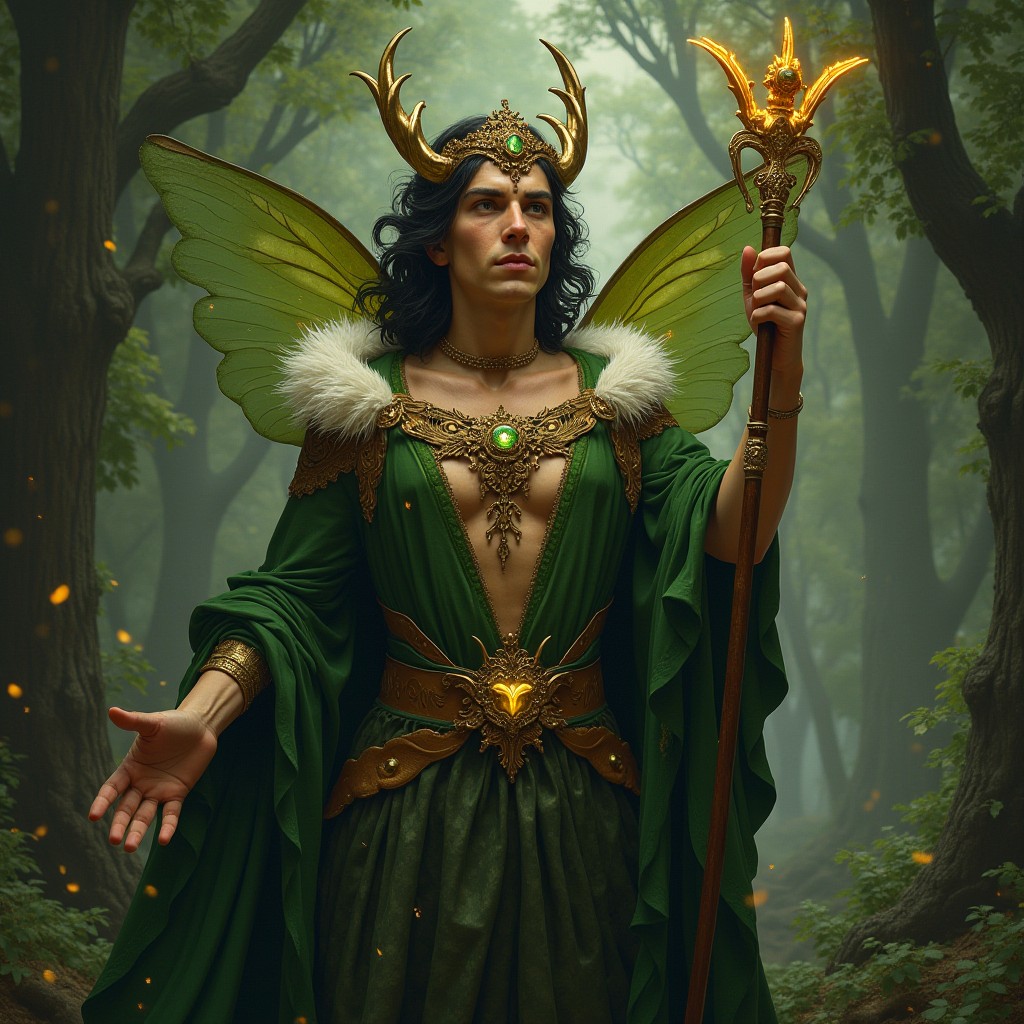 Oberon King of the Fairies
Fairy Garden Accessories for Outdoor Miniature Village

Transform your outdoor space into a whimsical retreat with fairy garden decor; perfect for creating magical scenes with fairy garden accessories that spark imagination.
Click here to check availability and pricing on Amazon!
Oberon, King of the Fairies
Who is Oberon?
Before we get into the details, it helps to understand who Oberon actually is. In the broadest sense, Oberon is the king of the fairies — a powerful, supernatural ruler who presides over the fairy realm.
He's not just a minor character in a single story. He shows up across centuries of literature, folklore, and mythology, taking on slightly different forms depending on the time period and the storyteller. What stays consistent, though, is his commanding presence, his magical abilities, and his role as the supreme authority in the world of fairies and elves. He's basically the top dog of the fairy world, and his story is a rich one.
The Name
Let's start with the name itself, because it tells us a lot. The name "Oberon" is believed to derive from the Old French name "Auberon," which itself may have roots in the Germanic name "Alberich."
That name comes from the Old High German words meaning "elf" and "ruler" or "power." So even the name itself carries the meaning of an elf or fairy king. Alberich was a well-known dwarf king in Germanic mythology and Norse legend, appearing in the Nibelungenlied and other medieval Germanic texts.
While Oberon and Alberich aren't the same character, they share a common linguistic and mythological ancestry that tells us the idea of a powerful supernatural ruler of the fairy folk goes back a very long way.
Oberon in Literature
"Huon de Bordeaux"
The earliest known literary appearance of Oberon by name comes from the medieval French romance "Huon de Bordeaux", which was written sometime in the late 13th century.
In this story, a French knight named Huon is sent on a seemingly impossible quest by the Emperor Charlemagne. Along the way, he encounters Oberon, described as a dwarf-like fairy king of immense magical power.
Despite his small stature, Oberon is portrayed as a wise and mighty figure who can control the weather, create illusions, and see into the hearts of men. He becomes a crucial ally to Huon, helping him complete his quest. This version of Oberon is already fully formed as a fairy king, suggesting the character had an even older oral tradition behind him.
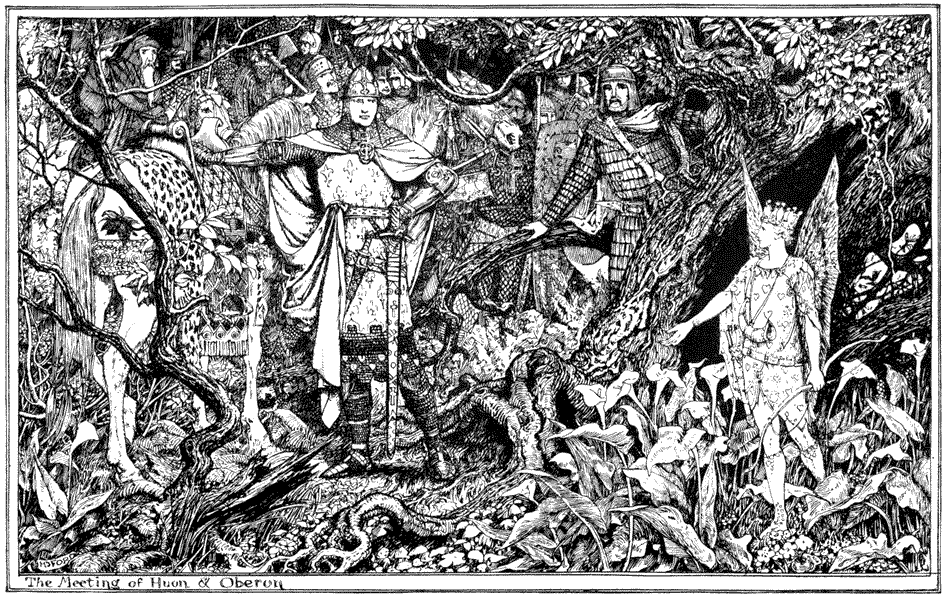 The Meeting of Huon and Oberon
What's really interesting about the "Huon de Bordeaux" version of Oberon is the backstory given to him. In the romance, Oberon is said to be the son of Julius Caesar and Morgan le Fay, yes, that Morgan le Fay, the enchantress from Arthurian legend.
This connection to Arthurian mythology is significant because it places Oberon within a broader tradition of magical and semi-divine beings who exist at the edges of the human world. His mixed heritage, part Roman emperor, part powerful sorceress, explains both his authority and his extraordinary powers.
It also shows how medieval storytellers loved to weave different mythological traditions together into something new and exciting.
The "Huon de Bordeaux" romance was hugely popular in medieval Europe and was eventually translated into English in the late 15th century by William Caxton, the man who brought the printing press to England.
This translation helped introduce Oberon to English-speaking audiences and laid the groundwork for his later appearances in English literature. It's a great example of how stories travel across languages and cultures, picking up new details and interpretations along the way.
By the time Oberon reached the English literary tradition, he was already a well-established and beloved figure with a rich backstory.
"A Midsummer Night's Dream"
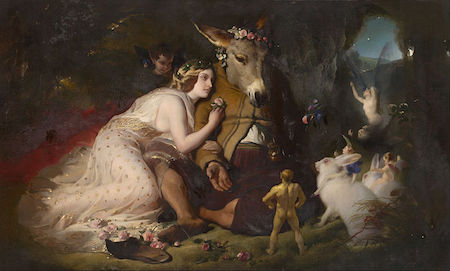 A Midsummer Night's Dream
Now we come to the moment that truly made Oberon a household name, at least for anyone who's ever studied English literature.
William Shakespeare's "A Midsummer Night's Dream", written around 1595 or 1596, features Oberon as one of its central characters.
In this play, Oberon is the king of the fairies, and he's in the middle of a fierce quarrel with his queen, Titania, over custody of a young Indian boy. This domestic dispute between the fairy royals sets off a chain of magical events that tangled up the lives of several young Athenian lovers and a group of amateur actors rehearsing a play in the woods.
It's one of Shakespeare's most beloved comedies, and Oberon is at the heart of it all.
Shakespeare's Oberon is a complex and fascinating character. He's powerful, proud, and sometimes manipulative - he's not above using magic to get his way, including enchanting his own wife Titania to fall in love with a man who's been given the head of a donkey.
But he's also capable of compassion and ultimately works to restore order and happiness by the end of the play. He commands the mischievous sprite Puck, also known as Robin Goodfellow, who serves as his loyal (if chaotic) assistant.
Oberon and Puck
The relationship between Oberon and Puck is one of the most entertaining in all of Shakespeare - the king gives the orders, and Puck carries them out with gleeful, unpredictable energy.
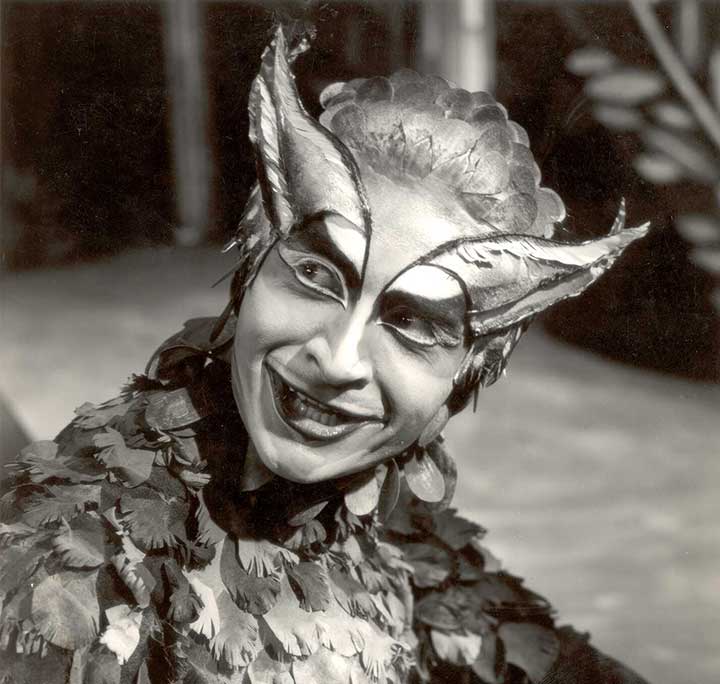 Puck (Royal Shakespeare Company)
Puck deserves a special mention here because he's so closely tied to Oberon's story. As mentioned above in "A Midsummer Night's Dream", Puck is Oberon's jester and servant - a shape-shifting, mischief-making fairy who delights in playing tricks on humans.
He's the one who mistakenly applies the love potion to the wrong Athenian lover, causing all the romantic chaos in the play. But Puck is also a figure from genuine English folklore, where he was known as a trickster spirit associated with the night.
Shakespeare took this existing folk figure and made him Oberon's right-hand man, which was a brilliant creative choice. Together, Oberon and Puck represent the dual nature of the fairy world - powerful and purposeful on one hand, chaotic and unpredictable on the other.
Oberon and Titania
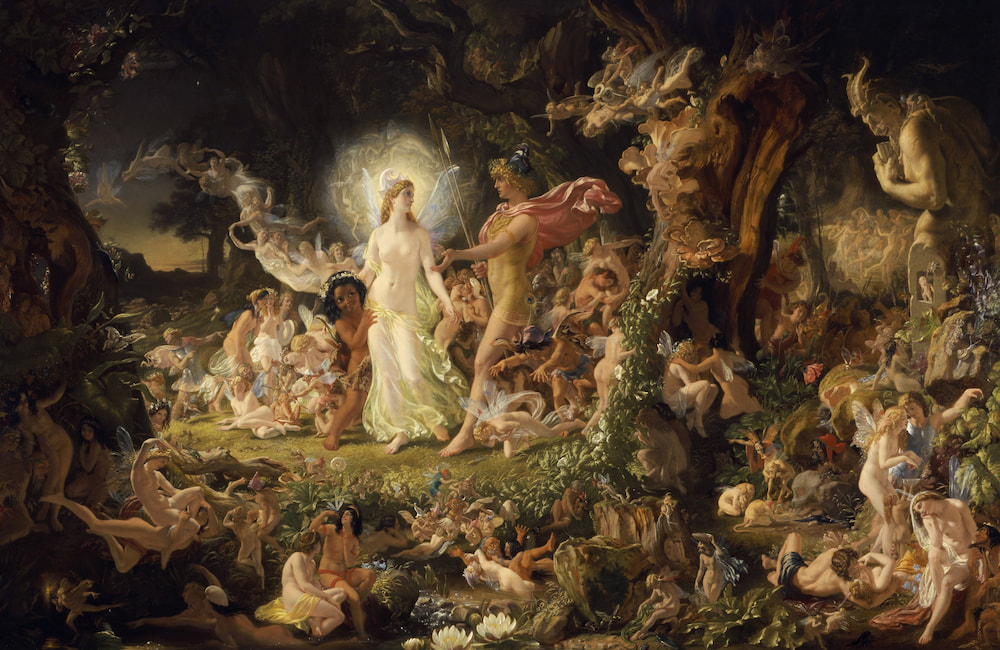 The Quarrel of Oberon and Titania
The relationship between Oberon and Titania is one of the most iconic pairings in all of fairy mythology. As Oberon, the fairy king and his queen, they represent a kind of cosmic balance in the fairy realm.
When they argue, nature itself is thrown out of whack - Shakespeare describes floods, failed harvests, and confused seasons as a result of their quarrel. This idea that the harmony of the natural world depends on the harmony of the fairy monarchs is a deeply rooted concept in fairy lore.
It reflects an older, pre-Christian worldview in which supernatural beings were intimately connected to the cycles of nature. Their reconciliation at the end of the play restores not just their relationship but the natural order itself.
Oberon, King of the Fairies
Other Literary Works
Shakespeare wasn't the only Renaissance writer to feature Oberon. The English poet Edmund Spenser referenced fairy royalty in his epic poem "The Faerie Queene" (1590), though his fairy king figure is somewhat different.
More directly, Robert Greene's play "James IV" (around 1590) features Oberon as a fairy king character, suggesting the name was already well-known to English audiences before Shakespeare's play.
And in the early 17th century, playwright Ben Jonson wrote a masque called "Oberon, the Fairy Prince" (1611), which was performed at the court of King James I. In Jonson's version, Oberon is portrayed as a noble and virtuous prince - a flattering allegory for the young Prince Henry, heir to the English throne.
Beyond the Renaissance
Moving beyond the Renaissance, Oberon in literature continued to evolve and inspire writers for centuries.
One of the most significant post-Shakespearean treatments is Christoph Martin Wieland's epic poem "Oberon" (1780), a German work that returned to the "Huon de Bordeaux" source material while adding new romantic and philosophical dimensions.
Wieland's "Oberon" was enormously influential in the Romantic era and was later adapted into an opera by Carl Maria von Weber in 1826.
Weber's "Oberon" opera brought the fairy king to concert halls across Europe and introduced him to a whole new audience. The opera's overture remains one of the most recognizable pieces of Romantic orchestral music to this day.
Oberon in Mythology
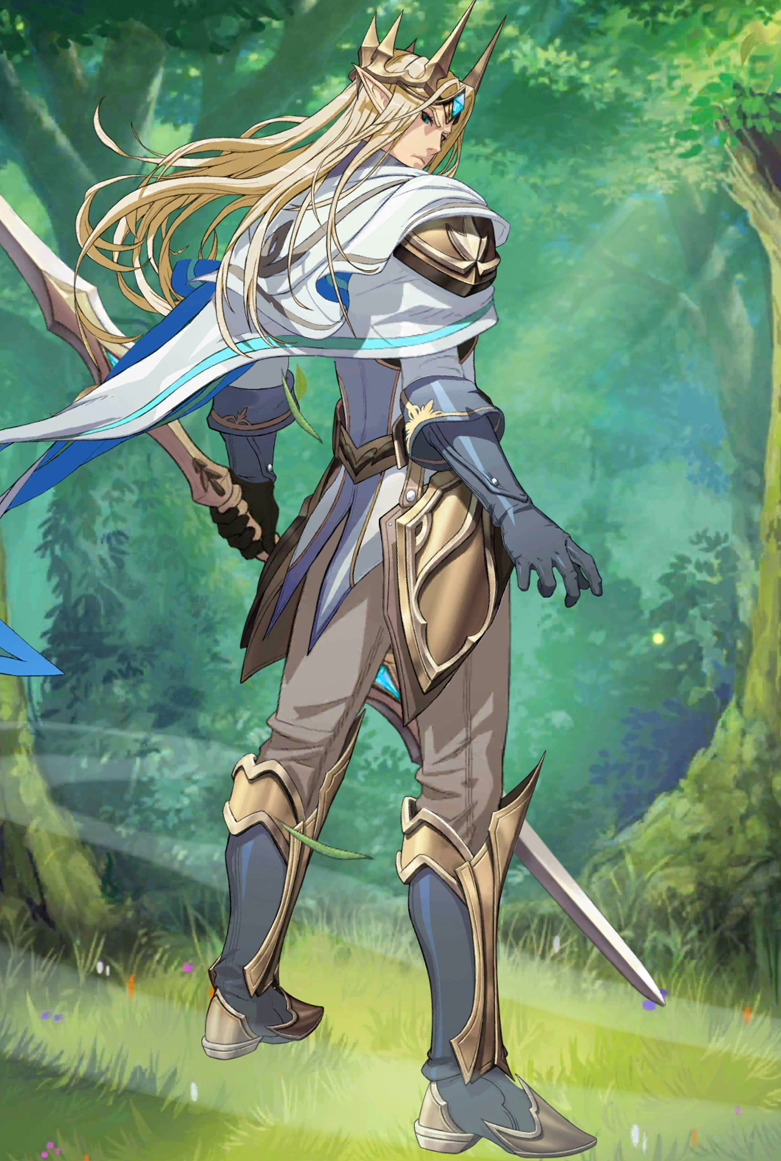 Oberon, a Mythical Hero
The Romantic movement of the late 18th and early 19th centuries had a deep love affair with fairy mythology in general, and Oberon fitted right into that sensibility.
Romantic writers and artists were fascinated by the idea of a hidden fairy world existing just beyond the edges of human perception, a realm of beauty, danger, and enchantment.
Oberon, as the king of that realm, became a symbol of the sublime and the mysterious. Painters like Henry Fuseli, who created the famous painting "Titania and Bottom" (1790), brought Shakespeare's fairy world to vivid visual life. These artistic interpretations reinforced the image of Oberon as a regal, otherworldly figure, noble and beautiful but also slightly unsettling.
Mythological or Literary Creation?
It's worth pausing here to address a question that often comes up: is Oberon a "real" mythological figure, or is he purely a literary creation? The honest answer is that he sits somewhere in between.
Unlike figures like Zeus or Odin, Oberon doesn't come from an ancient religious tradition with temples, priests, and sacred texts. His origins are in medieval romance literature rather than ancient mythology.
However, the broader tradition of fairy kings and queens, powerful supernatural rulers of the otherworld, does have deep roots in pre-Christian European belief. Celtic and Germanic peoples both had rich traditions of otherworldly rulers, and Oberon can be seen as a literary crystallization of those older, vaguer beliefs into a single named figure.
 Oberon in Celtic Mythology
Celtic Folklore
In Celtic folklore specifically, there's a strong tradition of fairy kings and the concept of the "Otherworld", a magical realm that exists alongside the human world.
Figures like Finvarra, the fairy king of Connacht in Irish folklore, share many characteristics with Oberon: they're powerful, sometimes capricious rulers who interact with humans in ways that can be either helpful or harmful.
While there's no direct line connecting Oberon to Celtic mythology, the cultural soil from which he grew was certainly fertilized by these older traditions. Medieval European storytellers were drawing on a deep well of fairy belief when they created and shaped the character of Oberon.
Oberon in the Modern World
The question of Oberon's relationship to the Seelie and Unseelie Courts is another interesting thread to pull on.
In Scottish fairy tradition, fairies were divided into two groups: the Seelie Court (generally benevolent fairies) and the Unseelie Court (generally malevolent ones).
Modern fantasy literature and games have enthusiastically adopted this framework and often place Oberon as the king of the Seelie Court, the "good" fairies, if you want to oversimplify it.
This is a relatively modern interpretation rather than a traditional one, but it shows how Oberon has been absorbed into a broader, synthesized fairy mythology that blends elements from different traditions into a coherent fantasy world.
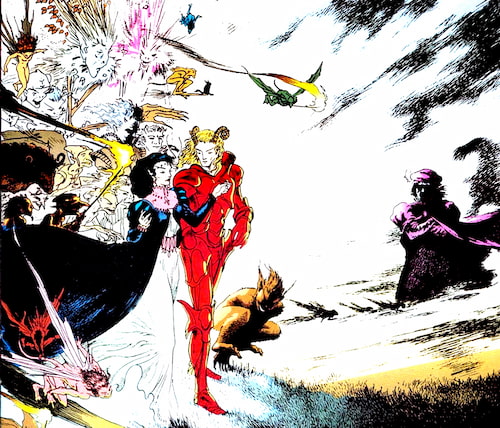 Oberon in The Sandman comic series
The 19th and 20th centuries saw Oberon pop up in a wide range of literary and artistic contexts. He appears in various Victorian fairy tales and poems, often as a distant, majestic figure who represents the fading magic of the old world.
In the 20th century, writers like James Branch Cabell and Lord Dunsany incorporated fairy king figures into their fantasy fiction, drawing on the Oberon tradition.
Perhaps most notably, Neil Gaiman's "The Sandman" comic series (1989–1996) features Oberon as a character, referred to as the "High King of Faerie", alongside Titania.
Gaiman's treatment is sophisticated and literary, presenting Oberon as an ancient, powerful, and somewhat melancholy figure whose glory days may be behind him.
Oberon Art
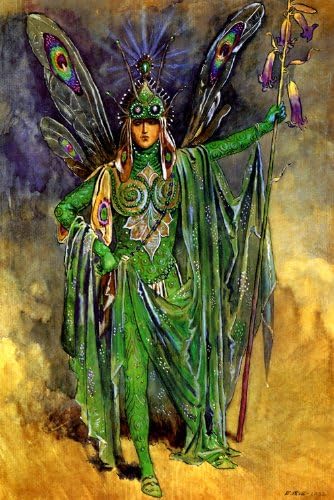
Nowadays it is also possible to purchase Oberon canvas art! Click here for further details on Oberon King of Fairies Midsummer Night's Dream Play Fairy by C Wilhelm - a Repro on Canvas.
Oberon and Fantasy Gaming
 Oberon from Dungeons & Dragons
Oberon, king of the fairies has also made his mark in the world of fantasy role-playing games and tabletop gaming. In Dungeons & Dragons, Oberon appears in various editions as a powerful archfey, a category of supernatural beings who are essentially the most powerful and ancient of the fairy folk.
He's portrayed as a noble but dangerous figure, the kind of entity that even experienced adventurers should approach with caution. The inclusion of Oberon in D&D lore reflects how deeply embedded this character has become in the broader fantasy genre.
He's not just a Shakespearean footnote, he's a living part of the fantasy world that millions of gamers inhabit every week.
Television and Film
In television and film, Oberon has appeared in various forms over the decades. The TV series "Supernatural" features an episode involving Oberon.
Various stage productions of "A Midsummer Night's Dream" have given us memorable interpretations of the character over the years, from grand Victorian spectacles to modern, stripped-down productions that emphasize the darker aspects of his personality.
The 1999 film version of "A Midsummer Night's Dream", starring Rupert Everett as Oberon, brought the character to a mainstream cinema audience. Each new interpretation adds another layer to the character's already rich legacy.
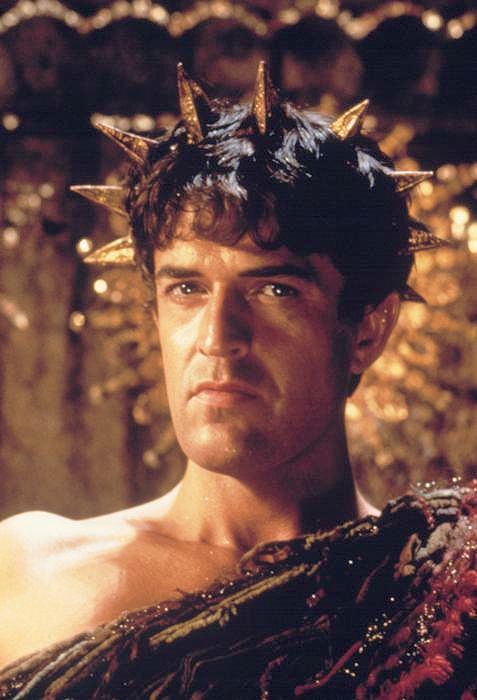 Rupert Everett as Oberon
Oberon and Science
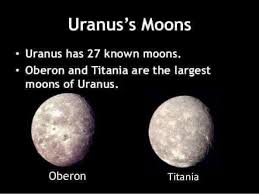
One of the most fascinating aspects of Oberon's modern legacy is his presence in science. In 1787, the astronomer William Herschel discovered two moons of Uranus and named them Oberon and Titania, after the fairy king and queen from Shakespeare's play.
This was a lovely tribute to Shakespeare's imagination, and it means that Oberon literally has a place in the cosmos. The moon Oberon is the outermost of Uranus's large moons and has a heavily cratered surface.
The naming tradition for Uranian moons continued with Shakespearean and Popean characters, but Oberon and Titania were the first, cementing the fairy king's place not just in literature and folklore but in astronomy as well.
Fantasy Literature
In the world of modern fantasy literature, Oberon continues to inspire writers and readers alike. He appears or is referenced in works by authors like Terry Pratchett, who lovingly parodied fairy mythology in his "Discworld" series, and in urban fantasy novels where the fairy world intersects with the modern one.
The "Oberon" name has become almost a shorthand for "fairy king" in the fantasy genre. When a writer wants to evoke a powerful, ancient ruler of the fairy realm, Oberon is often the first name that comes to mind.
This is a testament to how thoroughly Shakespeare's portrayal embedded itself in the cultural consciousness. From a medieval French romance to a Shakespearean comedy to a Uranian moon to a D&D archfey, Oberon's journey is one of the most remarkable in all of mythology and literature.
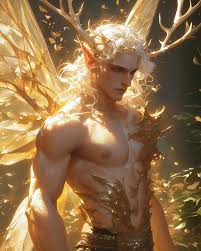 One of the many depictions of Oberon
Conclusion
So there you have it - a deep dive into the world of Oberon, king of the fairies.
From his linguistic roots in Germanic mythology to his first named appearance in "Huon de Bordeaux", through Shakespeare's immortal portrayal in "A Midsummer Night's Dream", and all the way to his modern incarnations in comics, games, and television, Oberon has proven himself to be one of the most enduring and versatile figures in the entire fairy tradition.
He's not just a character - he's a symbol of the magical, the mysterious, and the powerful forces that humans have always sensed lurking just beyond the edges of the everyday world.
Whether you're a folklore enthusiast, a Shakespeare lover, or a fantasy fan, Oberon, king of the fairies has something to offer you.
And honestly, that's pretty magical in itself!
Brightown 12 Pack LED Fairy Lights

Perfect for both everyday decorations as well as holiday decor. Easy to bend it to any shape or wrap it on anything you want like photos, shelves, walls, mirrors, crafts, furniture, wreaths, trees, branches, plants, flowers, or wedding déco! Indoor or outdoor use.
Click here for availability and best price on Amazon!
Most Popular!

Sequel to When the Moon Hatched - a vibrant world with mysterious creatures, a unique magic system, and a love that blazes through the ages!
CLICK HERE for availability and best price!
Recent Articles


-
Fairy Coloring Pages
Jun 14, 26 06:13 AM
 Fairy coloring pages and drawings to be printed
 -
Accessories For A Fairy Garden - Bring Magic To Your Backyard!
Jun 14, 26 06:05 AM
 Find the best accessories for a fairy garden - be inspired by our magical selection for your fairy world - be the envy of your neighbors!
 -
Fairy Tail Video Games
Jun 12, 26 03:43 AM
 Fairy Tail Video Games! Find out what makes Fairy Tail such a great fit for video games, and all about the franchise that has built a gaming legacy!